Last week researchers from across the UK gathered at Space Park Leicester to take part in the NERC Earth Observation Data Analysis and AI Service (NEODAAS) & NERC Field Spectroscopy Facility (FSF) “Practical use of Earth Observation data in research” training course.
Held from the 28th April to 1st May at the National Centre for Earth Observation (NCEO) headquarters, Space Park Leicester, the four-day course aims to equip participants with the skills to choose and use Earth Observation (EO) data in their research, regardless of their existing level of EO knowledge. Participants were introduced to the fundamentals of remote sensing before learning how to select and access EO data, how to process and visualise these data, as well as how to collect data using field spectrometers and a brief introduction to using machine learning approaches for EO data.
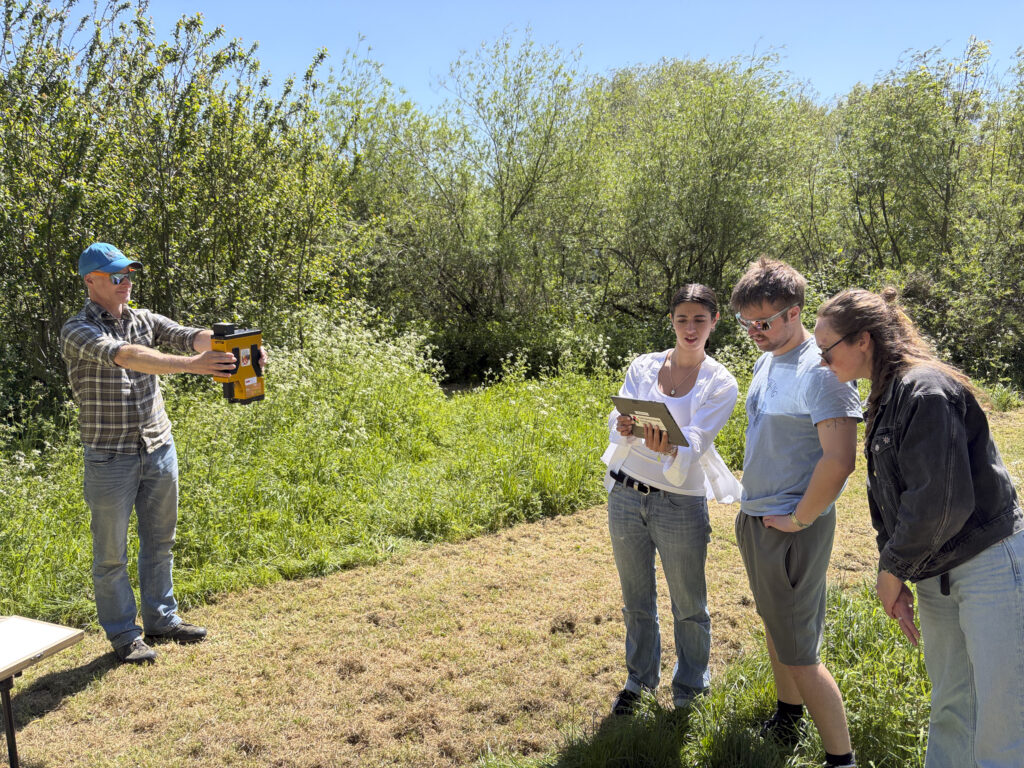
The course combined talks and hands-on practical sessions. Participants used web-based tools, GIS software and Python via the JASMIN notebook service to explore and analyse data from field spectrometers, airborne platforms and satellites. Attendees also gained experience running JASMIN GPU enabled notebooks for machine learning exercises. Stepping away from their laptops, participants also headed outdoors to spend a morning exploring the vegetation and other surfaces around Space Park Leicester with field spectrometers, learning best practices from FSF and gaining insight into how ground measurements are used to interpret measurements captured from space.
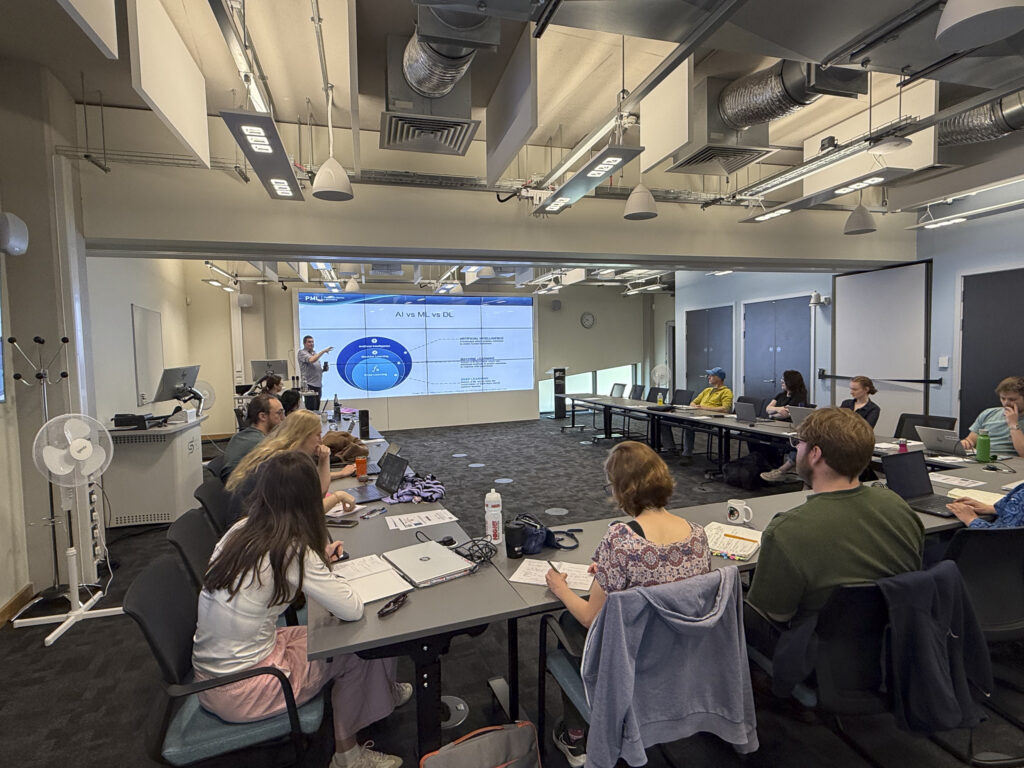
The course also featured guest talks from leading researchers Ekbal Hussain (BGS), Stefan Simis (PML) and Steven Hancock (University of Edinburgh), who showcased how they use EO data in their own research.
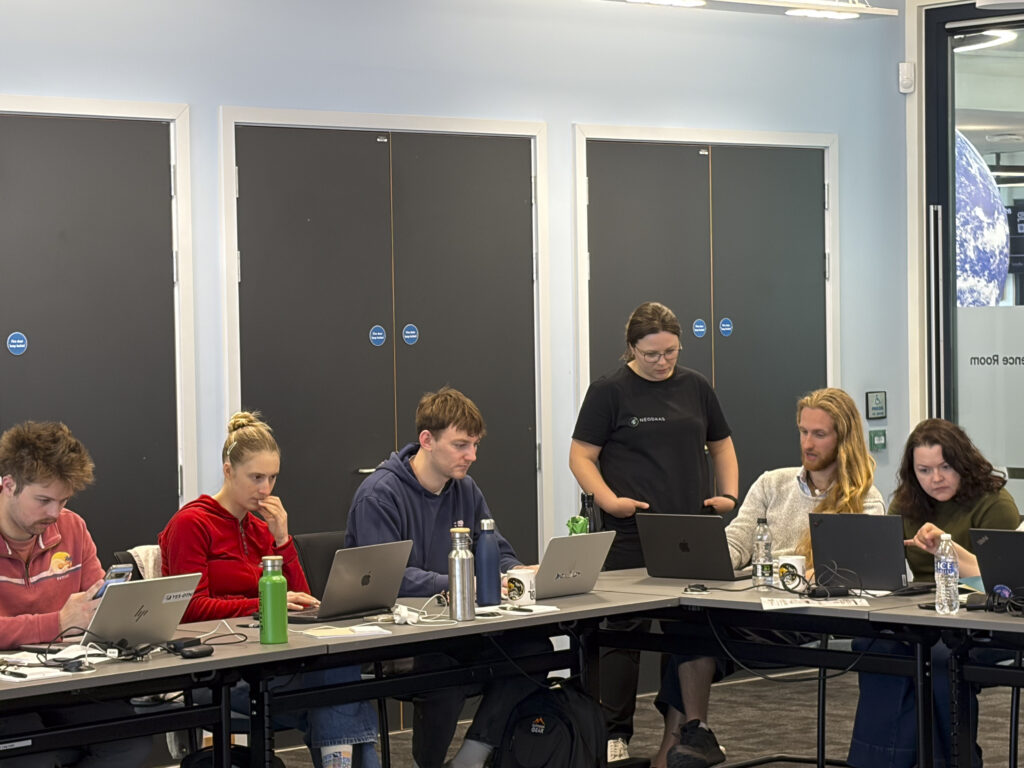
A total of 25 participants were selected for the training course of which 18 attended in person with the remainder online. The cohort included PhD students from a range of doctoral training programs, including from QUADRAT DTP, SUSTAIN-CDT, YES-DTN, Oxford NERC Environmental Research DTP, Flood CDT, CENTA DTP, Intelligent Earth CDT, Artificial Intelligence for Environmental Risk CDT, alongside other researchers at more advanced career stages.
For more information on future training opportunities please get in touch with NEODAAS or FSF.
NEODAAS and FSF are Natural Environment Research Council (NERC) funded facilities, overseen by NCEO and open to anyone eligible for NERC funding.